I’m really bad at writing reviews.
Hackers - Steven Levy
2024-11-26 to 2025-02-23
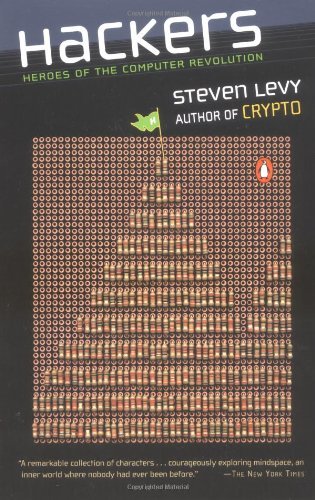
I wrote about this one briefly in my previous year’s book post, but I was still in the process of reading it.
For me this was a more difficult read, Levy brings in so many different names from around that time period and it was hard to keep them all straight mentally. I’m sure I ended up missing some very interesting connections. It ended up being more dense for me than the subject matter would suggest.
The fact that it was published in 1984 (and presumably written for several years preceding) was likely the most interesting aspect for me. Being brought up post-internet ubiquity, despite not having much exposure to it until my teenage years, much of the history I have ingested has a bias towards that massive event, and I haven’t dug much into the 60s and 70s when computers were vastly different and eschewed by the general population. The limited history I have dug into deals with the 90s and the advent of GNU/Linux, but that was well after the personal computer and different operating systems. So, I was glad to
The most impressive thing to me about Levy’s style is his ability to construct a narrative from primarily interviews, but almost certainly a litany of other secondhand sources, and really give it personality. It ends up being a really engaging history book, almost toeing the line of gonzo journalism in that it contains personal information not available except for the fact that Levy conducts so many interviews. It’s not so much a historical retrospective 20, 50, or 100 years removed as much as it is a first- and second-hand account of the time period, from a contemporary writer. I really dig that about it.
Welcome to the Monkey House - Kurt Vonnegut
2024-12-25 to 2025-03-01
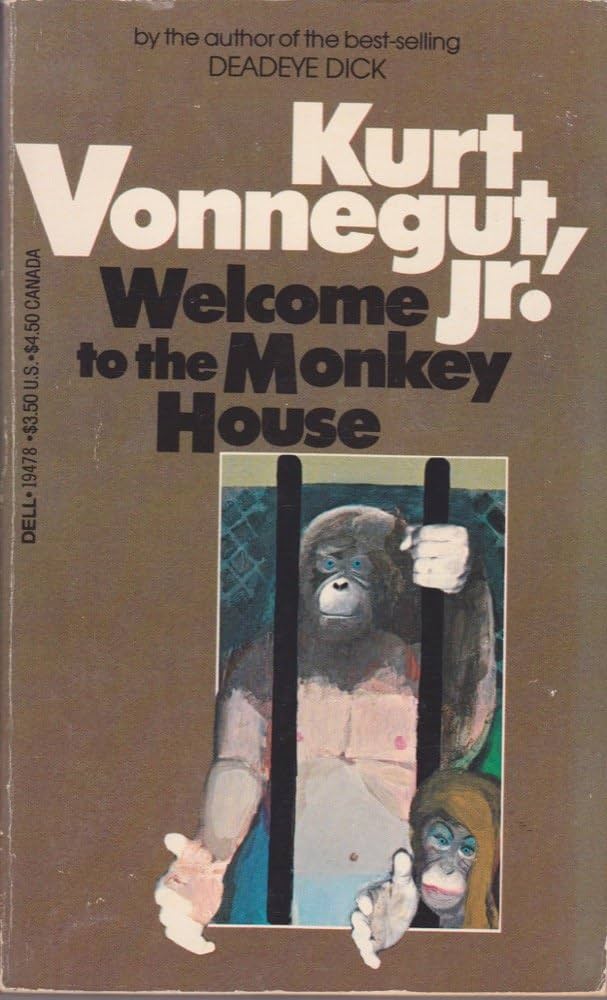
Again, wrote about this one previously. I enjoyed it quite a bit - as is the case with any group of short stories, some were better than others. I don’t have too much more to say.
Some of my favorites:
- Harrison Bergeron
- Miss Temptation
- Tom Edison’s Shaggy Dog
- Report on the Barnhouse Effect
- The Manned Missiles
The Way of Kings - Brandon Sanderson
2024-12-27 to 2025-03-02
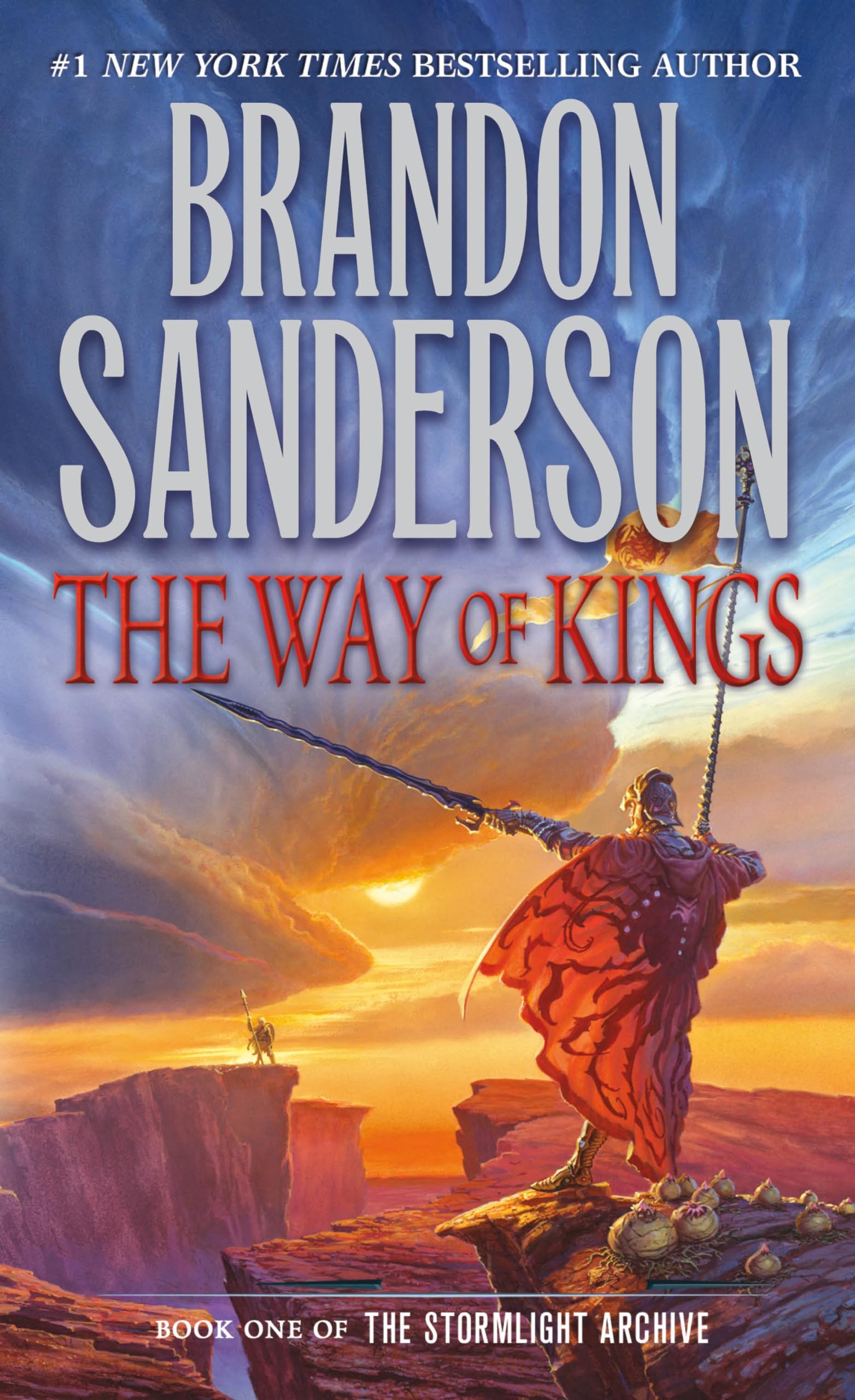
This one was a re-read, I had read it back in 2022 and enjoyed the heck out of it. I enjoyed it less my second time around, but it still kept me engaged. I think a lot of that has to do with the fact that it simply isn’t The Wheel of Time.
Even on my first go-round, though, I had some gripes with Sanderson’s style - specifically dialogue. It comes across like he didn’t put much effort into it, I suppose would be the best way of putting it. Or maybe there’s a juxtaposition of some dialogue that fits with the world, and some dialogue that couldn’t have possibly been written in any other time than the 2000s or 2010s. For me getting torn out of my investment in the world can be as short as a character saying “Yeah” or “Anyway”, or can continue for a page of Shallan and Jasnah exchanging dialogue dripping with modern feminism.
Not saying that you can’t or shouldn’t write about that, and I think it would certainly work in a fantasy world, but why would you build this world of Roshar and Vorinism, where you can write whatever the hell you want, and then proceed to assign gender roles where some things are exactly the same and others are slightly modified and not very interesting, really (safehands, for example). It just seems half-baked, to me. The lighteyes vs darkeyes thing isn’t the most engaging to me either, it has a similar problem of mapping almost 1:1 to modern or semi-modern issues and not really bringing much to the table in terms of interesting commentary or approach. Not really what I’m looking for in a fantasy novel - again, writing about these issues is fine, but what I like about fantasy is how creative you can get with the setting and characters, and how you can still map those onto real-world issues. Sanderson’s attempt here feels uninspired.
I also remember highly disliking Shallan’s character in the first third of the book my first time through - her dialogue just killed me. In fact I almost stopped reading the book, but I didn’t have much better to do at the time and I was encouraged by the friend who got me into it to press on. Dalinar and Kaladin ended up being worth it, and Shallan got to be less of an annoyance as the book progressed.
Overall: the worldbuilding is all right, certainly novel. Some very good things - I like the idea of highstorms dictating various aspects of lifestyle, travel at sea, the fauna, etc. The overall history of the world is keeping me invested. Some things have been misses though, the Parshendi culture comes across as cheesy, for instance. The spren…eh? Seems like a cool idea but I’ve thus far been disappointed. The dialogue leaves a lot to be desired most of the time, honestly. But the characters - apart from the dialogue - have been built up very well in terms of history, motivations, unique abilities. I think it’s really the characters that keep me invested more than anything.
As I write this (I’m trying to write reviews shortly after I complete a book so it’s fresh in my memory), I’m almost caught up with where I quit reading in the second book. I most certainly needed the refresh, so I’m glad I re-read.
One last thing, I remember being totally caught off guard and shocked by the ending my first time through, and I didn’t fully remember it before reading it again this time. I was…unimpressed? I’m still trying to assess whether that’s just because I’d read it before and had expectations that couldn’t be met, or if I was just overly impressed the first time through.
Crypto - Steven Levy
2025-03-01 to 2025-03-10
Where Hackers left me feeling lost in many places, and ended up leaving me with more questions than when I started, Crypto helped fill in some gaps. Especially after finishing Cryptonomicon, written right around the same time but Neal Stephenson’s fictional take on the scene.
My same praise of Levy applies here, but I was far more engaged. I think I can credit that to this being a subject matter that is a little less removed from me, and I’ve already dug into some before. It was fucking cool to read, in Levy’s very personal and contemporary style, how modern cryptography came to be - really how the internet can even function today. I’ve studied asymmetric crypto systems before, but I never really understood how much of a breakthrough they were at the time. Today, asymmetric encryption is ubiquitous, expected, taken for granted. Back then, it questioned a fundamental law of cryptography. I took it for granted for a long time, or, more accurately, didn’t even really give it too much thought.
This book was great, and right up my alley. Privacy in the digital age has always been a subject close to my heart - if you couldn’t tell from the rest of this blog.
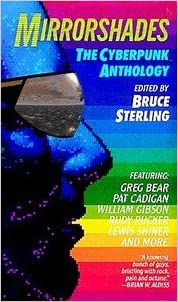
Mirrorshades - Bruce Sterling (editor)
2025-03-16 to 2025-03-30
“You will watch the earth turn black in the tireprints of my Harley, man, okay?”
Unfortunately the cover pictured is not the edition I own, I remember looking for a long time for a used version of this cover for <$50 and never found one. I bought this years ago, right around the time when I started reading William Gibson’s Neuromancer, and had never finished it. I fell out of reading entirely shortly thereafter.
I very much enjoyed the stories, but what really stuck with me was Sterling’s preface. In the past when I was actively reading something like Neuromancer and someone started a conversation about it, I’ve struggled to explain what exactly cyberpunk is, and why the cheesy name. (Nowadays, I get responses like “You mean the game?”.) It doesn’t help my case that I didn’t live through that era and I’m still piecing together a lot of context through my non-fiction consumption such as Crypto and Hackers. The next time someone asks me, I’ll just tell them to read these few pages. Sterling put together an incredible description of where the genre stood at the time of writing (~1986) and how it contrasted with prototypical sci-fi of the era and earlier eras, in addition to being an engaging meta-commentary on literary criticism. Being a cyberpunk writer and literary critic himself, it puts him in a uniquely qualified position to write such an introduction.
As for the stories themselves, none really stuck out to me as must-reads, but I don’t really have one that I’d say is particularly bad. Petra was bizarre, I’m not really sure I “got” Tales of Houdini. Solstice was probably the one that sticks with me the most, it was the only one I didn’t read in one sitting. Mozart in Mirrorshades had me in stitches (hence the quote at the beginning of this section).
This is all leaving the fact aside that I honestly haven’t delved too much into cyberpunk itself, especially considering this was back in the mid-80s and it’s inevitably expanded so much since (can I even say my favorite genre is cyberpunk when I’ve read so distressingly little of it?). My favorite finds out of getting into cyberpunk have probably been Sterling’s works, and Neal Stephenson, even though he’s not featured in this anthology and, probably, later-era.
I have some Rudy Rucker on my shelf, and I’ve read some Gibson, but none of the other authors (outside of Sterling himself) I’ve really read. I added a bunch to my list that I take whenever I go to the bookstore, so ideally I will ingest some more over the coming months/years.
In a nutshell, I think what grips me about cyberpunk is how grounded and human it is. None of these stories shy away from the tough subjects, that I was so used to being shoved under the rug or avoided growing up - drugs, sex, technology, violence, you-name-it. It sounds cheesy and vapid to put it that way, but that’s part of what makes it grounded - technology is no longer the distant future, it’s here, and it’s everywhere. These stories would feel dishonest if they didn’t cover the layman, the street urchin, the ones feeling the impacts of ubiquitous, invasive technology at ground-level. Hard sci-fi at its best.
I’ll end with a quote out of Sterling’s preface - cause he can phrase it infinitely better than I can:
Quote
Science fiction - at least according to its official dogma - has always been about the impact of technology. But times have changed since the comfortable era of Hugo Gernsback, when Science was carefully enshrined - and confined - in an ivory tower. The careless technophilia of those days belongs to a more sluggish era, when authority still had a comfortable margin of control.
The Age of Reason - Thomas Paine
2025-03-16 to 2025-04-13
This book struck a chord with me.
I was raised Christian, with what I can look back and say are strong morals. But upon moving out and living on my own, I threw all of it out the window. I tossed the good out with the bad. That is to say, most of the good aspects of being a part of a church or having a belief in God - community and fellowship, direction and purpose in life, evergreen values such as humility, integrity, non-materialism - I tossed out the window along with what I view as the “bad” (or at the very least unnecessary) - the religious dogma, the Bible, the memorized prayers, moral performatism. I’m still sifting through the wreckage and trying to determine what went wrong.
Reading Paine made me realize that I had this preconception that you were either a part of an established religion, or not. One or the other. Christian or Atheist. With or against. True, I could tell you factually that atheism and agnosticism exist on a spectrum outside the bounds of organized religion, but I guess I didn’t really know what either one entailed.
But Paine, in spite of what the contents of this book at a glance might indicate, is professedly a Deist. No need to carry the baggage of the Bible; in fact he proceeds to systematically dismantle it with nothing but the Bible’s own words. In the early 1800s, no less. This isn’t exactly a new idea.
I can’t speak for the historical aspect: what impact this may have had on where religion or lack thereof stands today, but I can tell you that reading this had a profound effect on how I perceive my own beliefs.
Disbelieving the Bible doesn’t make me the atheist, or the centrist, or necessarily a part of some other religion, or even noncommittal. I can have a strong belief in God without having to accept the ludicrous jumble of texts that is the Bible. I can acknowledge the good that exists in it without having to accept it in its entirety. It’s not something that I’ve consciously thought about until recently, but that’s how I’ve felt for years.
Specifically, how he details that human language simply cannot be the vehicle for the Word of God simply resonated with me. I’ve felt this way about Biblical translations for years - just the number of versions of the Bible we have today. Even just two, KJV and NIV, are one more than enough. How am I supposed to believe that the millions of people who have been involved in initial writing, multiple translations, distribution, voting on what books to include, have all been “inspired”? Reason cries out in opposition. And reason is God-given. I haven’t been able to make those mental gymnastics quite work.
Another thing that Paine touches on is the idea that the sciences are theology. Just because we understand the laws of the universe, or can harness them to our benefit or comfort, does not mean we are creating those laws. Paine actually argues that brings us closer to our Deity. Seeing the beauty in creation is the true Word of God, in paraphrase.
My perception informed by society all my life has been this: science on one side, religion on the other. Science and reason is God, or the god of the Bible is God. No in between. To read this argument, written when it was, floored me.
Atheism has always seemed so arrogant - mankind is so small. Agnosticism has seemed noncommittal and directionless. All religions seemed tied up in unnecessary dogma.
Why not be a true Deist?
Words of Radiance - Brandon Sanderson
2025-03-02 to 2025-04-29
I don’t know what to say about this. My earlier gripes with Sanderson’s style still apply, but I’m still reading the series, so he’s doing something right.
I have a friend who’s really into this series and I ended up having a day-long text exchange with him regarding the style, but then I proceeded to read the greater half of the book in about a week’s time after that.
I guess I can understand that the overall style is a little more lighthearted, and maybe I don’t jive with the specific humor most of the time, but there are some specific examples of character thoughts or dialogue that are just downright stupid and unnecessary. In this book in particular, I think back to a specific line. Kaladin is getting a ladle of water from a rainbarrel for himself (as opposed to having a runner or a servant do it for him) “That was fine with him, he wasn’t some spoiled rich boy.” I wasn’t aware of that. Thank you Sanderson.
Things like that are obviously not going to ruin the whole book for me, but they’re peppered all throughout. Death by a thousand cuts, right? I don’t appreciate it when it’s not there, I just can’t help but notice it when it is there.
God writing is hard. Writing about writing is also hard.
TL;DR: still not The Wheel of Time - but nothing is.
The Toynbee Convector - Ray Bradbury
2025-03-31 to 2025-04-30
A nice collection of short stories. I definitely enjoyed this less than I did the other two collections I’ve read this year, but it was engaging. It’s been a damn long time since I’ve read any Bradbury.
Overall quality: mixed. But there were some really good ones:
- The eponymous “The Toynbee Convector” - great (despite predicting the ending)
- “One Night in Your Life” - am I having a midlife crisis?
- “One for His Lordship, and One for the Road!” - this one made me lose my shit laughing
- “A Touch of Petulance” - Bradbury always has an interesting spin on time travel
- “Junior” - also ROFL
Data and Goliath - Bruce Schneier
2025-04-16 to 2025-05-18
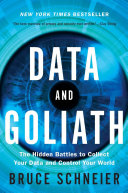
A well-researched foray into the state of privacy and security in the age of mass surveillance. Not a book that’s mean to document all examples of government and corporations infringing upon digital rights, but certainly has myriad examples (not hard to find, really). Dealing with a subject that is rife with idealism and uncompromising values - which I appreciate - I also appreciated how this book not only states those ideals but goes into practical applications and possible solutions for governments, corporations, and individuals. Unfortunately getting from the current state of privacy and surveillance to digital liberty is not an easy overnight fix, and Schneier recognizes that fact.
I’ve also enjoyed following his security blog - https://www.schneier.com/
Also, I thought it was a lot longer than it was based on the length. The last third of the book is all references. Crazy.
Wizards (anthology) - Isaac Asimov, Martin H. Greenberg, Charles G. Waugh (editors)
2025-05-04 to 2025-06-01
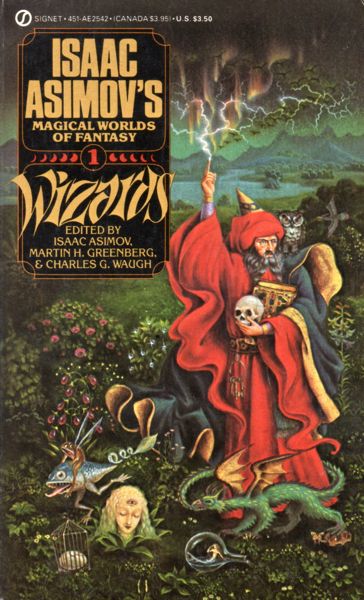
I’m not regretting the decision to keep a short story novel going at all times. This one I didn’t get by recommendation, I just sort of stumbled across it in a used bookstore, and figured it’d be nice to try out some fantasy short stories to break up the usual sci-fi anthologies I tend to default to.
I didn’t dislike a single one of these. Some in particular that stood out, though:
- “What Good Is a Glass Dagger?” (Larry Niven) - I don’t have anything insightful to say, just very much enjoyed this one.
- “The Eye of Tandyla” (L. Sprague de Camp) - fucking hilarious, much of the enjoyment comes from the fantasy-language parody in word choice
- “The Wall Around the World” (Theodore Cogswell) - gives me Harry Potter vibes in terms of magical vagueness, but short and almost fable-like in a way that Harry Potter isn’t (and I very much like that aspect)
- “The People of the Black Circle” (Robert E. Howard) - I’d never read a Conan the Barbarian tale before, I’d only seen one of the movies. The only thing I remember about that movie is the odd, gratuitous sex scene, and that Conan was portrayed as a massive dumb brute (at least that was my impression). I didn’t really have high hopes when I saw that this was a Conan story if that’s what the content was going to be. I was pleasantly surprised - Conan is portrayed as a capable, driven character who appreciates those around him despite the implication with the small backstory that he is a lone wolf and traveling vagabond. I don’t have much more to say, I’m afraid - I enjoyed the story, but particularly how Conan was portrayed.
The Language of the Heart - Bill Wilson
2024-10-19 to 2025-06-08
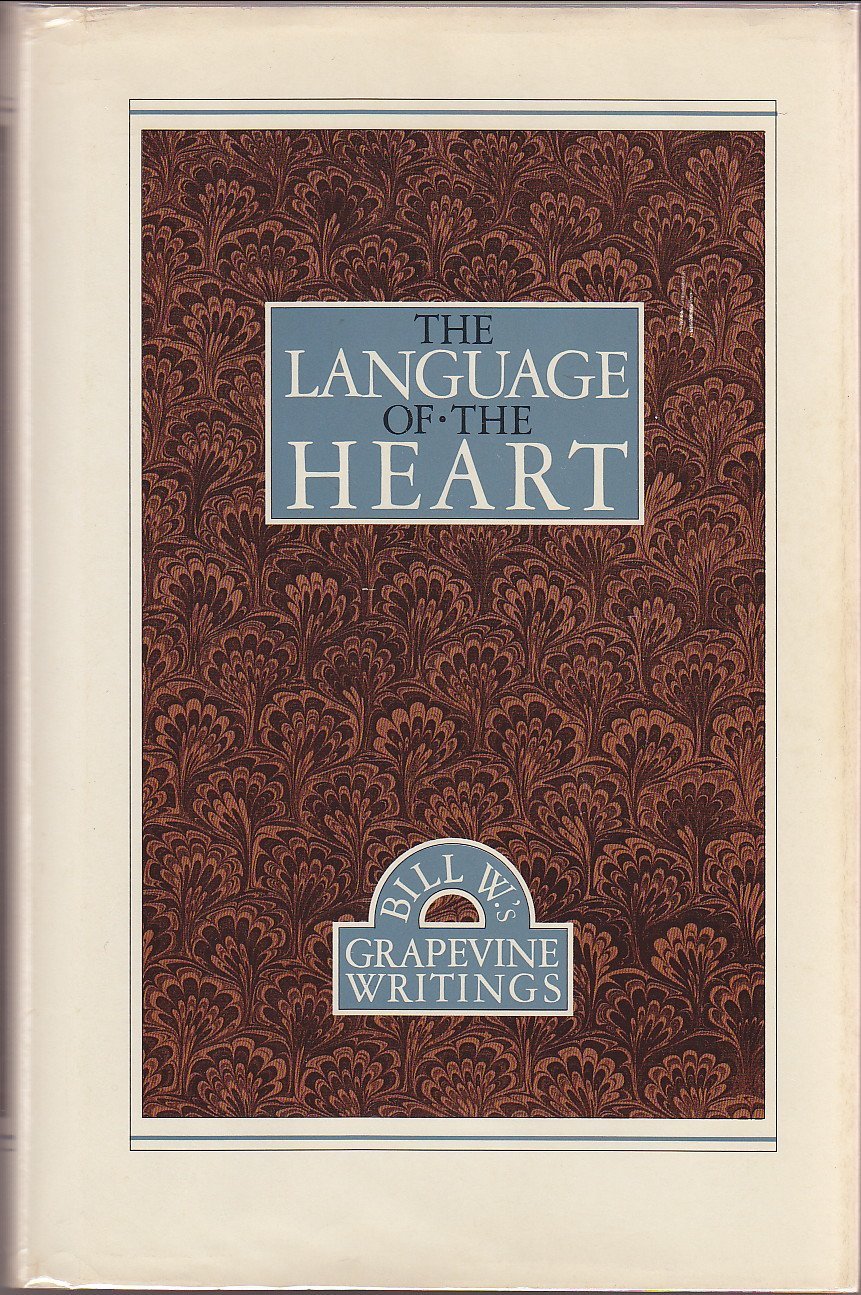
An insightful look into AA history from its beginnings to after it sprung into a worldwide movement, through the lens of Bill W.’s Grapevine writings. It impresses me that he so readily admits his own shortcomings as examples. In articles dealing with the Traditions and Steps, he is suggesting from hard-won experience rather than preaching ideals.
If I was writing about a specific article, I would have more to say, but I read this very piecemeal over the course of 8 months. The articles are individually quite short. I plan to re-read and mark specific articles that I could use for meeting topics in the future. If I were to study the Traditions again, I would reference this instead of the 12&12.
I did find his correspondence with Yale, in which he declines an honorary degree on the principle of anonymity, particularly inspiring. I’d heard it referenced previously but hadn’t actually read the letters myself.
Zodiac - Neal Stephenson
2025-06-15 to 2025-06-27
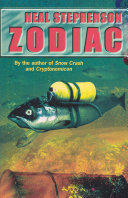
I thought this was Stephenson’s first novel, but I guess I have another one to read (The Big U) before I can say I’ve read his earliest work. I was a little hesitant when I first started reading and realized what it was about…I’m still not sure what to think about environmentalism, it’s one of those politicized issues where both sides seem to think the complete opposite, and I know it’s more nuanced than that. I do know that massive corporations and industrialism in general are the biggest factors in pollution, and that’s primarily what this novel focuses on. It was also written in the 80s - certainly not a new topic, but certainly newer compared to today, and less of an echo-chamber depending on the pundit you’re listening to.
He doesn’t disappoint, the level of detail shows the amount of research he put in. I don’t really get any of the usual science-y terms thrown around to appear intelligent while saying nothing. There’s also several instances of complicated chemistry explained in a layman’s fashion for the sake of the reader, but done in a diegetic way. And in typical Stephenson fashion, he weaves several unrelated plot threads together into a cohesive narrative that was just fun to read and more than the sum of its parts.
Software - Rudy Rucker
2025-06-28 to 2025-06-28
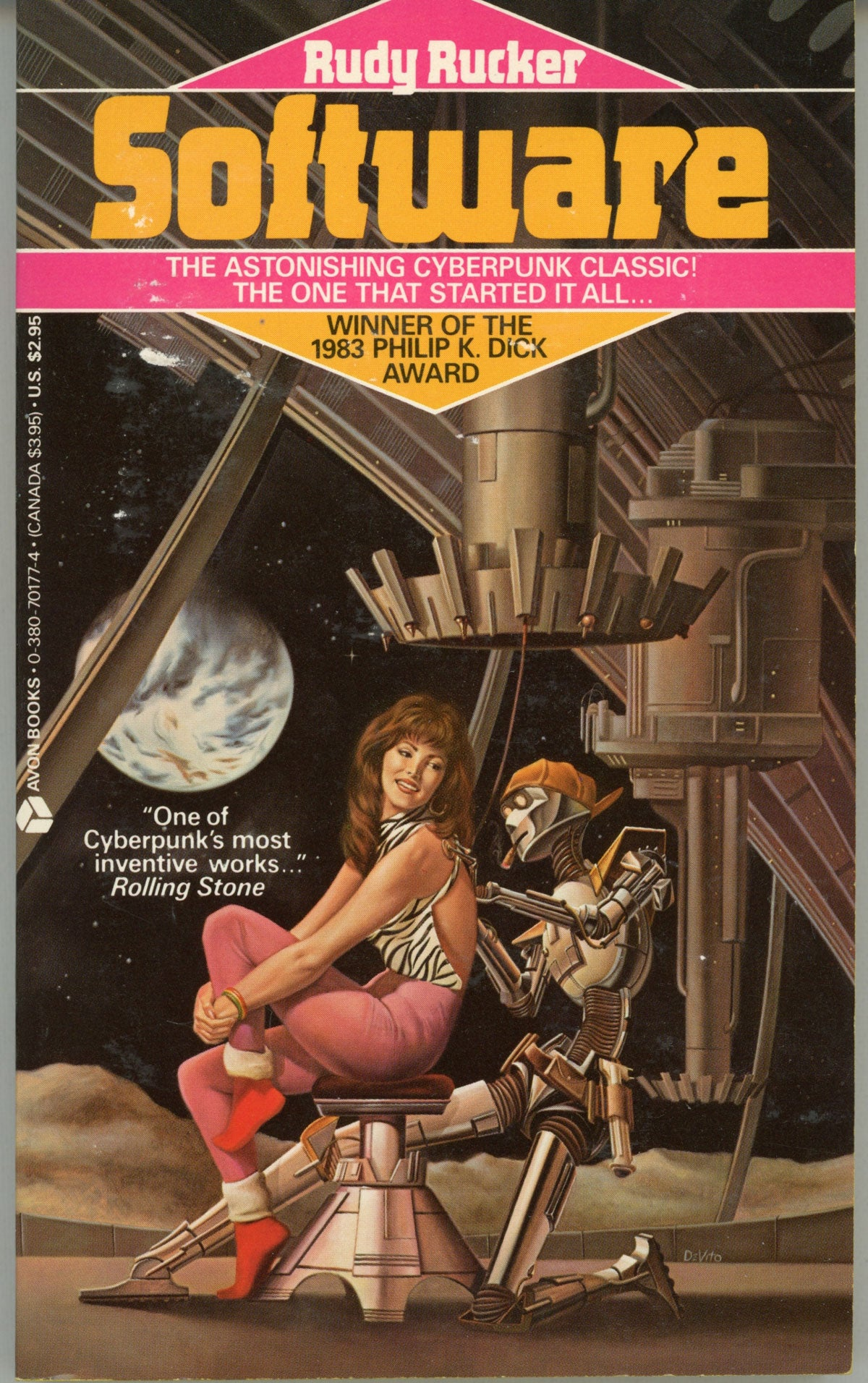
I’m writing this about 2 weeks after I finished this one, and I wish I had written out my thoughts on it earlier. I think I’d have to give it another go before really writing anything intelligible. Going back and reading some of the cyberpunk from the height of the era is interesting, though - nowadays concepts like consciousness = software can seem overdone and have nothing new or interesting to say.
I finished Mirrorshades back in March, there was a story in there called 400 Boys, and I thought when I started reading this one that Rucker was the author of it - I knew he was featured in that collection. (Perhaps a bit surface level - I thought “Sta-Hi” and “boppers” in this novel were along the same lines as the street gang slang in 400 Boys.) But no, his was Houdini, which I didn’t honestly think much of.
Fooled by Randomness - Nassim Taleb
2025-06-08 to 2025-06-29
I know nothing about the stock market and nothing about statistics, yet Taleb and I share one thing in common: resting-state skepticism. I won’t try to write a fluff piece here, I would be doing the book and myself an injustice.
Despite the subject matter being basically foreign to me, Taleb’s style makes for an easily digestible read. Something I will certainly come back to, hopefully when I have more of an understanding of the topics he uses as examples.
The Easy Way to Stop Smoking - Allen Carr
2025-07-20 to 2025-07-24
Yep. As of writing this, I haven’t made the commitment to stop. When I really stop and think about it, there’s a lot of fear involved. It’s my anxiety management tool, but I know it’s the cause of much of the anxiety. And I don’t need one unless I don’t have any. Bizarre.
What really gets me about this book is straightaway he makes sure you know that he smoked 100+ a day. He was the real deal confirmed smoker. If he can do it, you can do it. I’m a half-a-pack kinda guy and I’ve been down on myself about that. I’ve never gone over 25. Smoking 100 a day doesn’t leave time for breathing - I can’t even imagine that.
We’ll see if I can get past the brainwashing by my Christmas vacation. He advises to pick a less stressful time to get through the first bit - and yeah, I’m not really keen on trying to get through a day of work without my smoke breaks without a headstart, at this point.
Burning Chrome - William Gibson et. al
2025-07-15 to 2025-08-06
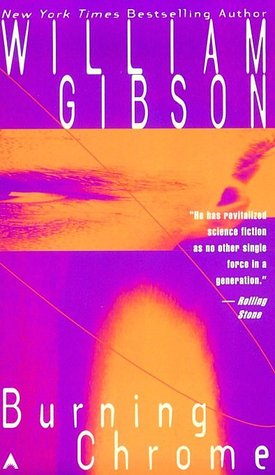
Slowly working my way through some more cyberpunk. I think the genre really shines in the short story or novella format. Stories don’t stick around long enough to warrant extensive worldbuilding, but there’s plenty of time to set up enough of an aesthetic. I also like how it’s less committal - I’ve always liked that about short stories. More experimentation. The idea doesn’t have to warrant an entire book.
“New Rose Hotel” for example is told entirely as a reminiscence, switching tenses as our narrator describes the present situation and thinks back over events leading up to the current situation, all the while addressing “Sandii”.
A couple standouts:
- “Hinterlands”
- “Dogfight” (with Michael Swanwick)
Oathbringer - Brandon Sanderson
2025-04-30 to 2025-08-09
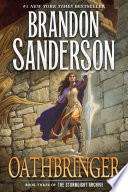
Don’t have much more to say regarding this series that I haven’t said before…I’m still reading it. Errs on the silly side which I don’t like in juxtaposition to how dark it can get. The humor and much of the language seem out of place in the world and takes me straight out of it. But, there are moments with each character that make it worth it.
Honestly I had so much hope after reading the first book, was really let down in the second book, and have kinda accepted my lot with this book. It won’t live up to my expectations, but that doesn’t mean it’s a bad series or not worth my time. Just not as serious of a read as I was hoping for.
I read the first third of this book from the end of April to the beginning of August, then ravaged the rest of the book on a long weekend trip. (It’s a thick one too.) That has to be worth something.
The Bogleheads’ Guide to Investing - Mel Lindauer, Taylor Larimore, & Michael Leboeuf
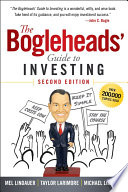
2025-09-20 to 2025-10-03
The last month of my life has been consumed by this question: how long would a million dollars last in retirement?
I’ve been kicking the can down the road for quite some time. I’ve intellectually known that the earlier I started the better, and after some life circumstances (largely of my own making), I’m finally back on my feet financially, and it was time. The answer to how long a million dollars would last - across the infinite amount of variables (do I factor in social security, what age do I plan to retire, how long do I expect to live in retirement, inflation, etc) - is ultimately “not long enough”.
I’ve honestly been both terrified and nonplussed about investment in general for a very long time. I don’t give a single shit about Wall Street, and trying to beat the market has always seemed like a zero-sum game. (This view was recently reinforced by Fooled by Randomness, too.) Where was I to even start? But I knew that keeping everything in a low-risk, highly liquid, low-return taxable account was not going to help me meet long-term savings necessities.
Enter index funds, and the bootstrap mentality of the Bogleheads. I’ve been really working on my budget and living below my means, and this book helped me take the next logical step into long-term savings in tax-advantaged accounts. And more importantly, some basics about where to invest, and what to ignore (spoiler: almost everything that Wall Street says).
Buy and hold in rock bottom cost index funds. Replicate the returns of the stock market average. Choose an asset allocation based on your risk tolerance - and this doesn’t need to be complicated. And above all, stay the course.
I’ve implemented almost everything that I need to at this time, and I’ll be returning to this book (and more often, the Bogleheads wiki and forum) for the years to come as I make trajectory adjustments and respond to life events. It’s really a weight off. And honestly, vindicating to read.
The Coffeehouse Investor - Bill Schultheis
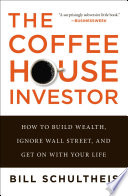
2025-09-28 to 2025-10-05
This is one of the books recommended in the Bogleheads Guide, and I enjoyed it. It expounded upon some of the things that the Bogleheads book went over.
It’s an easy read. Schultheis has this habit of repeating himself over and over on simple but important points, seemingly because he’s run into so many folks over the years that can’t separate the logic from the emotion when it comes to investing. Folks who he had explained the concepts of his strategy to over and over, and still couldn’t make the jump.
Much the same as I wrote about the Bogleheads Guide applies, but this book contained less practical advice and more of basic principles and a mindset reinforcement.
The Diamond Age - Neal Stephenson
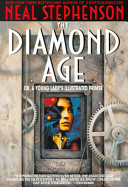
2025-10-04 to 2025-10-13
I don’t think anything I write will do this book justice, but I’ll give it a shot anyway.
What the fuck did I just read is the gist.
I initially got into Stephenson reading Snow Crash while I was looking for more cyberpunk to get into. Kickass novel (and I probably have mentioned it previously in this collection of reviews). Originally just read it because cyberpunk, and I didn’t really see much else from Stephenson under the flag of cyberpunk, and he was a little later on in the genre - 90s vs mid-80s - as opposed to someone like Gibson, so I didn’t continue reading his work for a while. What a tragedy.
I don’t know when I will learn this lesson. What always happens is that I finally get around to something else by an author, and it’s entirely different, but shot through with the same style, language, leanings, ideas. I come to love the artist when I was originally searching for a specific style or genre - something I decided I liked, or I liked in concept. The thing with that is I never really know what I want. I have an inkling, some half-formed ideas, a collection of previous experiences, but the thing about the rest of the literary world out there is that I haven’t read it and, honestly, I can’t describe what I like very well. This happens with music too - get into a specific genre, find the artists I love, then realize the majority of the genre is basically hogwash.
I think genre is a good way to find things - but I always need to remember that perusing genre is the way to find good artists. Nearly all of my favorites are genre-defining or genre-defying (sometimes both).
But to hone in on this particular novel: based on the vibes I thought this was going to be steampunk, at first glance. Instead, it’s a nanotech revolution, with a Victorian revival - not to mention the million other phyles in the cultural melting pot - set mostly in China. Setting is one of my favorite things about Stephenson novels. Characters, their motivations, and how seamlessly they blend into the setting is another. Praising one thing just makes me want to praise another and another - really, it’s a lot of tiny building blocks that contribute to a
I’m sitting here trying to write a witty summary but it just feels cheesy. I think I’ve said my piece. I say read the book and stop reading my review.
The Black Swan - Nassim Nicholas Taleb
2025-10-19 to 2025-12-25
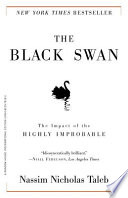
Expounds upon the ideas laid out in Fooled by Randomness. This book also has a mention of how his investment strategy works that got me thinking.
One of the most impactful books I read this year, but I’m not sure that I have much intelligent to say on it. It’s another that will get a re-read later, and I will be finishing the rest of the entries in his Incerto series.
Globalhead - Bruce Sterling
2025-10-19 to 2025-11-24
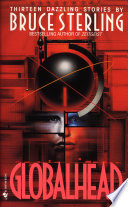
Went into this one thinking it was a novel and was pleasantly surprised by it being a short story collection. (That’s happened 3 times this year.) Didn’t technically finish…got a misprint of this book. It jumps from page 88 to 121, then from 152 back to 121, which cut off half of one story and almost the entirety of another.
Some standouts:
- Storming the Cosmos
- We See Things Differently
At the Mountains of Madness - H.P. Lovecraft
2025-11-25 to 2025-12-22
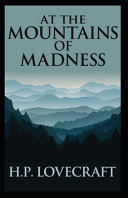
I should have read this during October, but oh well. I did pick up various other short stories, from three collections in total:
- Dagon
- The Call of Cthulhu
- The Dunwich Horror
- The Whisperer in Darkness
- The Haunter of the Dark
- The Thing on the Doorstep
- The Shunned House
- The Dreams in the Witch House
- The Statement of Randolph Carter
I’d read Lovecraft before, but not enough in one go to make some connections that I did this time. The first is his fascination with the unknown - whether that be the furthest reachest of our planet like the poles or the deep sea, the unexplored backyards like rural New England or the marshes of Florida, mathematics and higher dimensions, or even space. At times it borders on science fiction like in The Whisperer in Darkness.
The other thing I noticed about Lovecraft is the recurring lore or world in his stories. An obvious one is the Necronomicon, but the Old Ones, Outer Ones, Shoggoths…all products of Lovecraft’s imagination that get namedropped in many tales.
All this to say, reading Lovecraft standalone isn’t as enjoyable as reading multiple stories in quick succession. I had read At the Mountains of Madness previously, but wasn’t able to make these connections, and I enjoyed it far more the second time around after having read several stories beforehand.
Wrap-up
I didn’t quite get to 25 books in 2025 as was my goal - dropped off towards the end of the year. But all in all it was a solid year. I feel like I read a good mix, as opposed to the last few years where I’ve read primarily fantasy.
Favorite fiction read - The Diamond Age
Favorite non-fiction read - The Black Swan
Most actionable read - The Bogleheads Guide to Investing
Here’s to 26 books in 2026!
EOF